Context
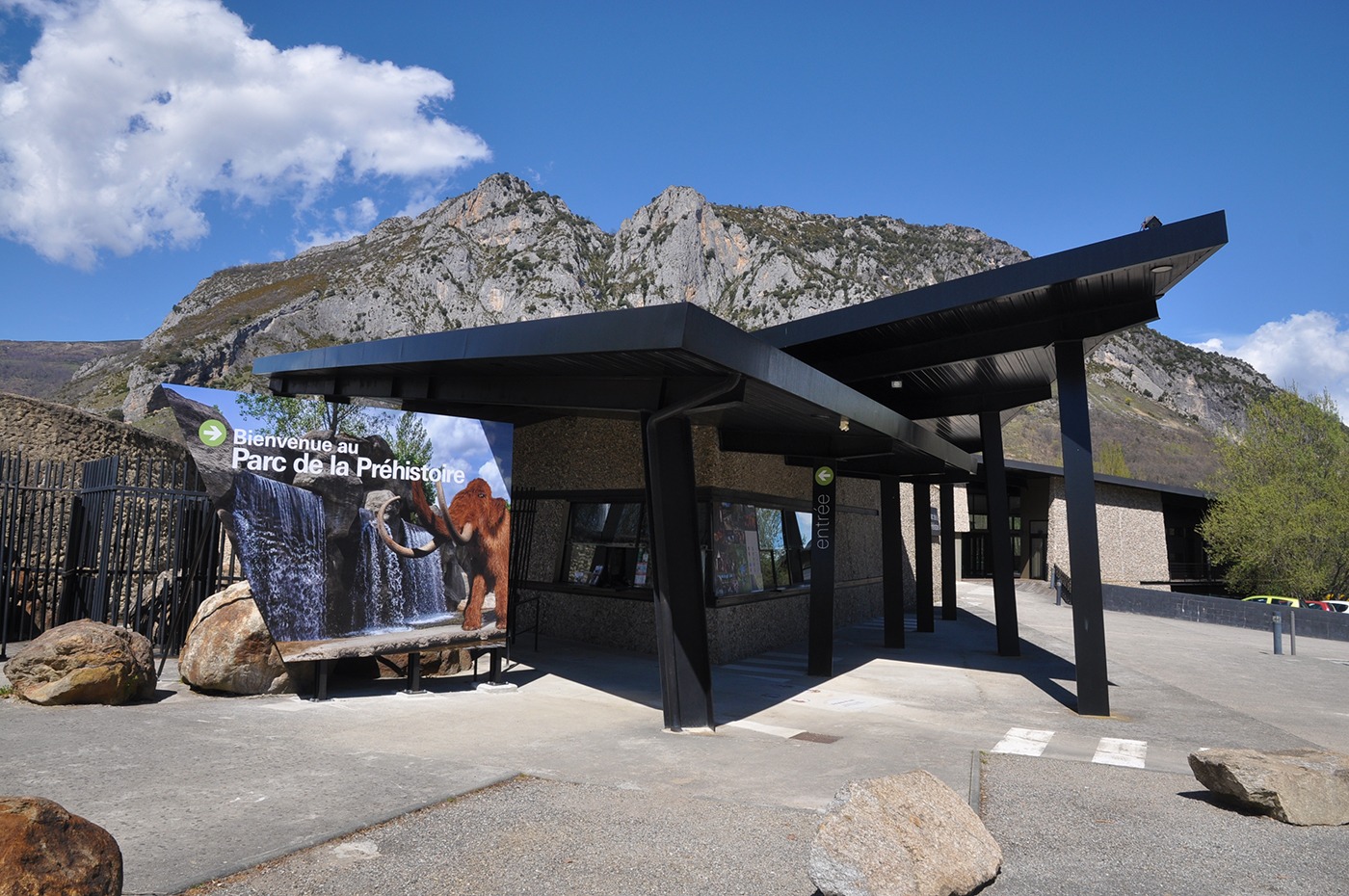
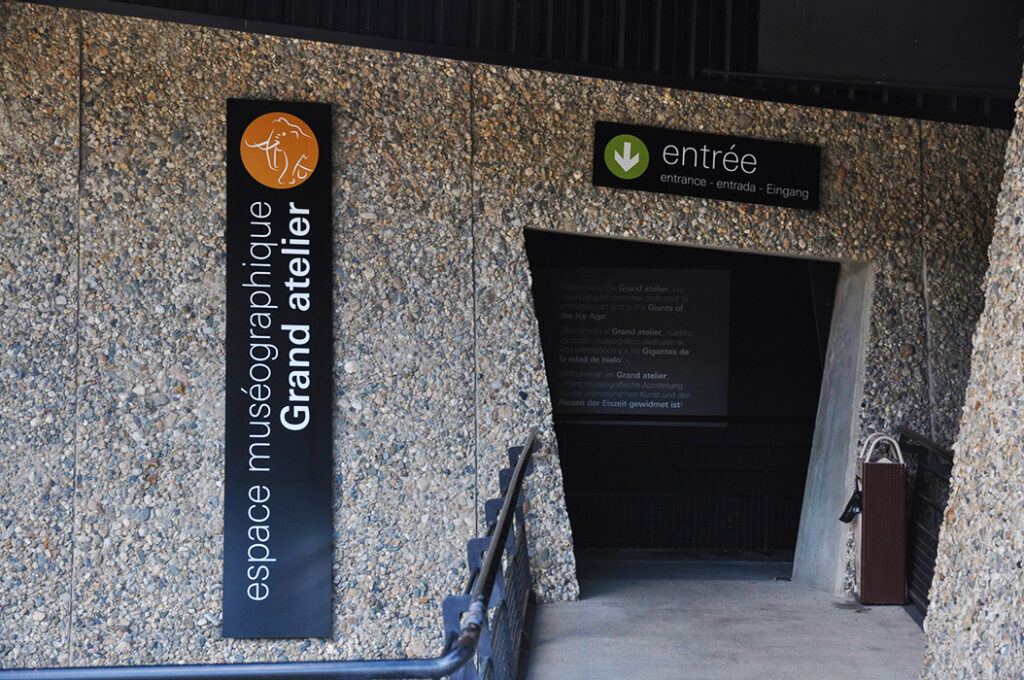
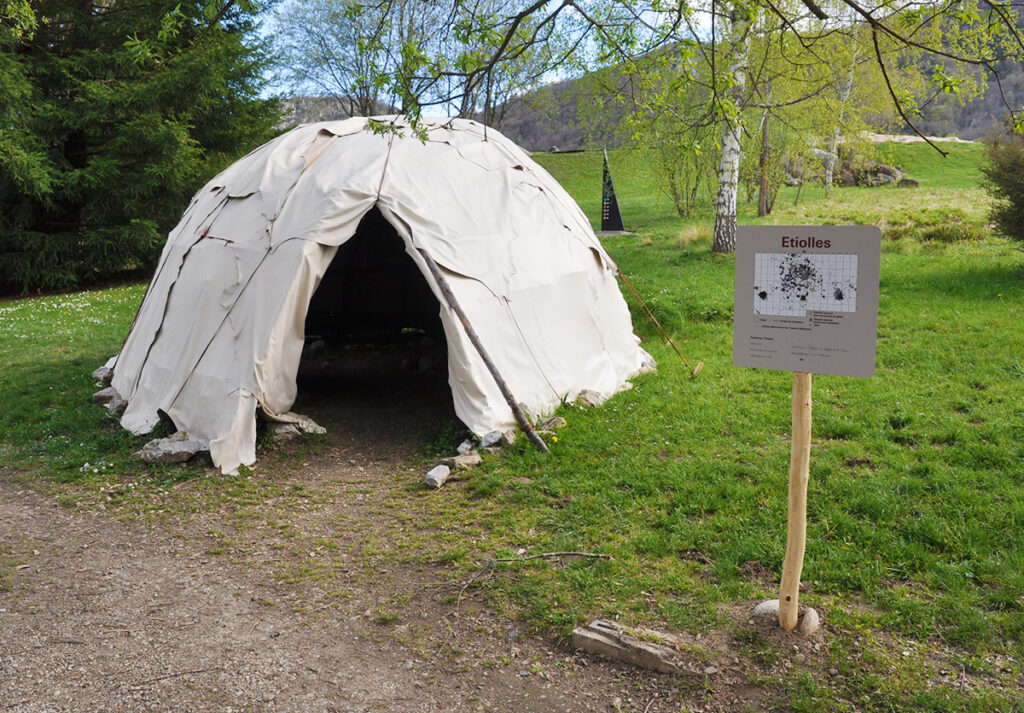
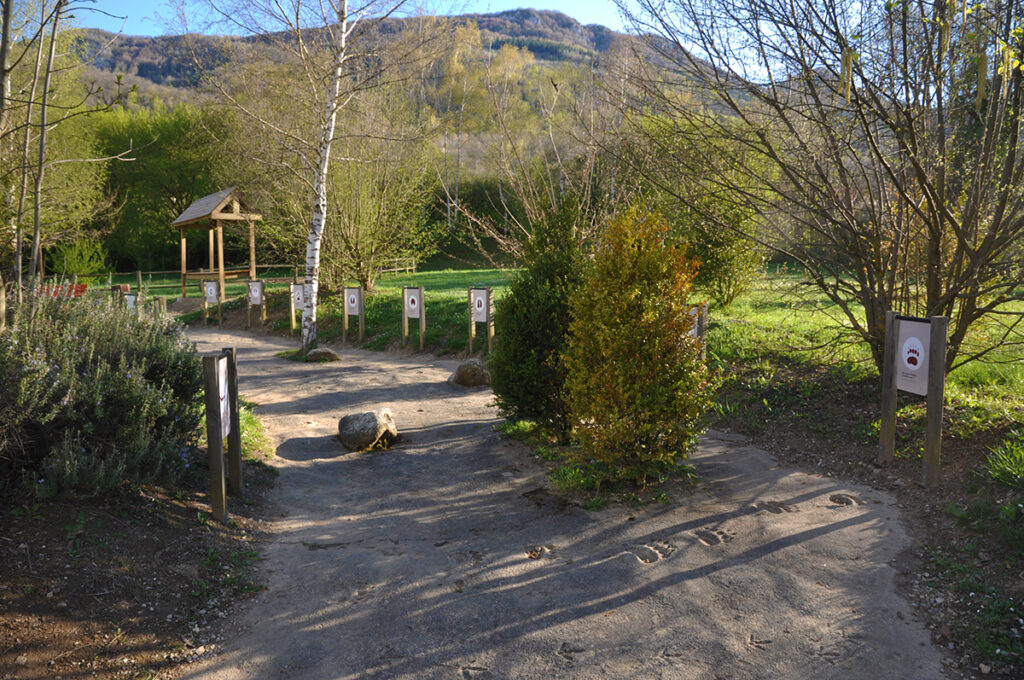
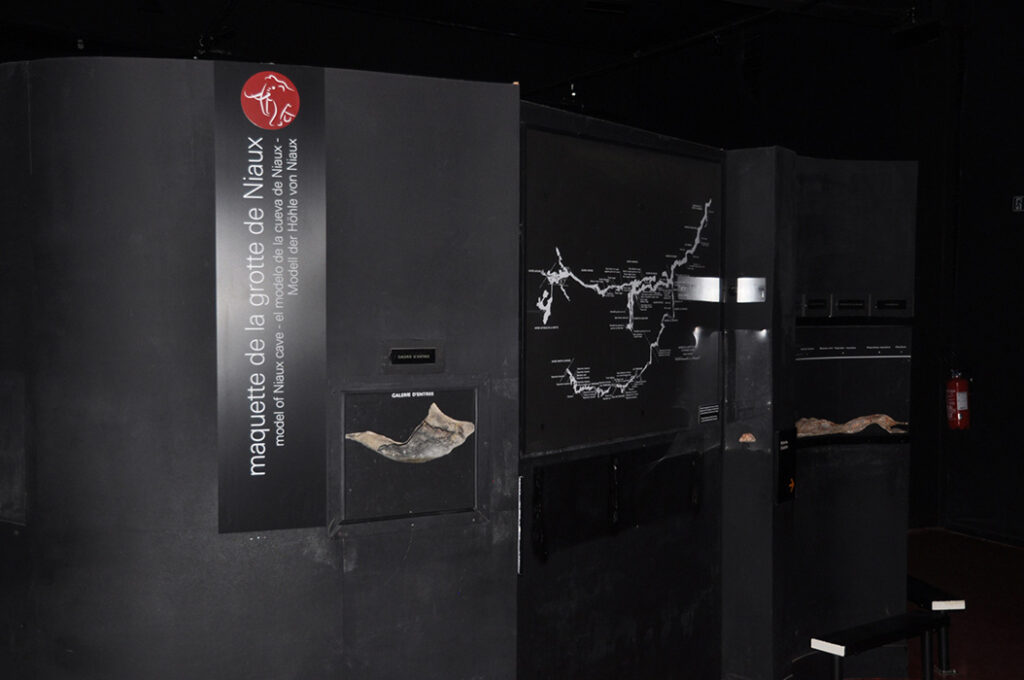
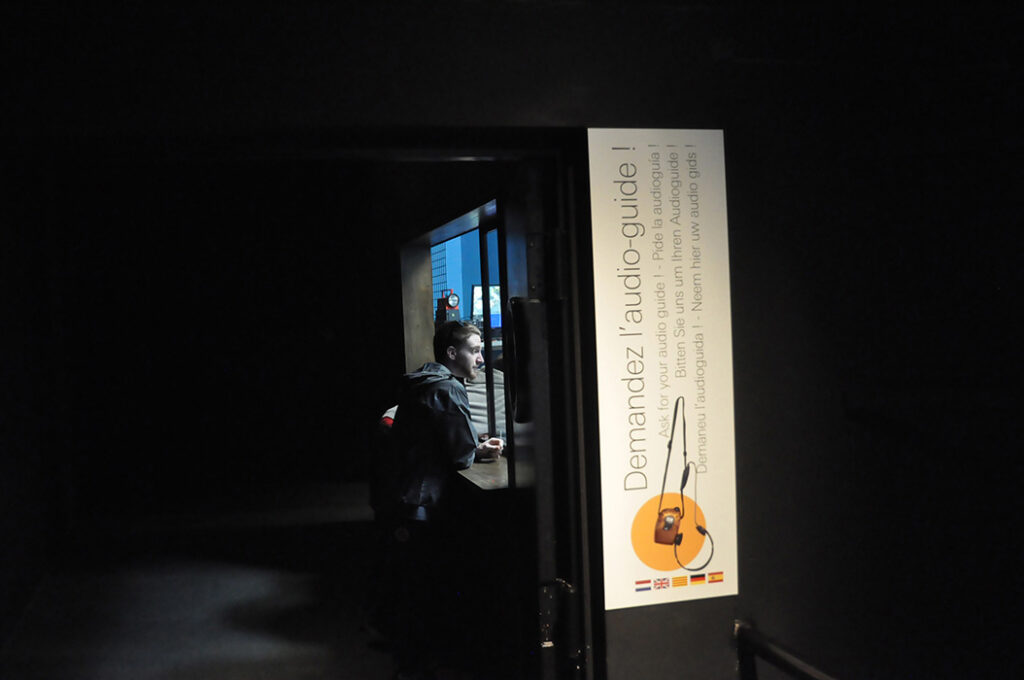
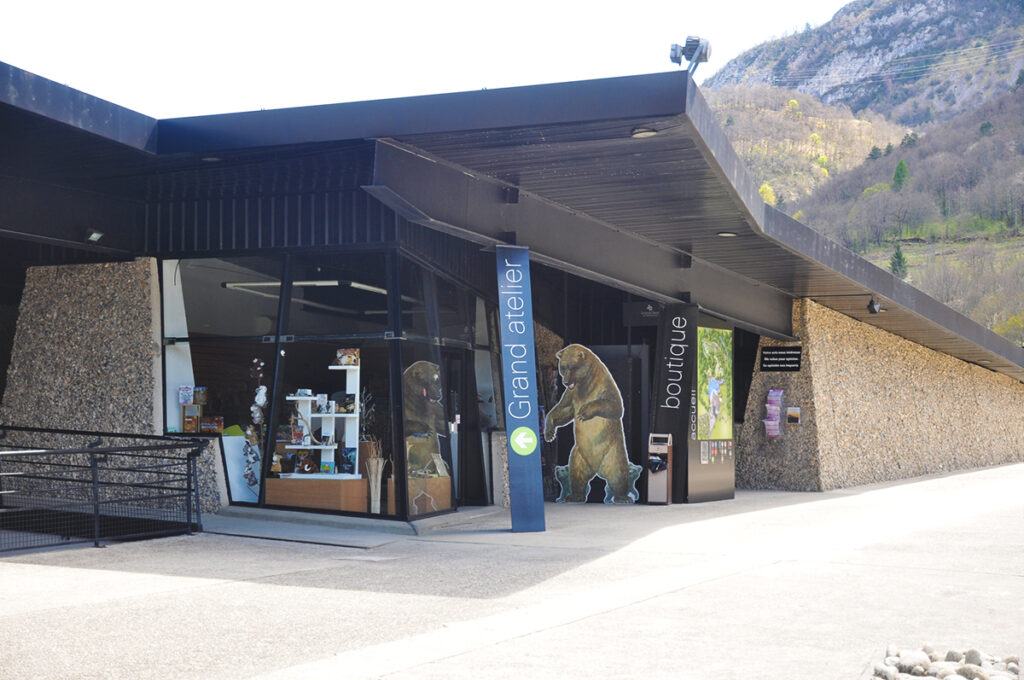
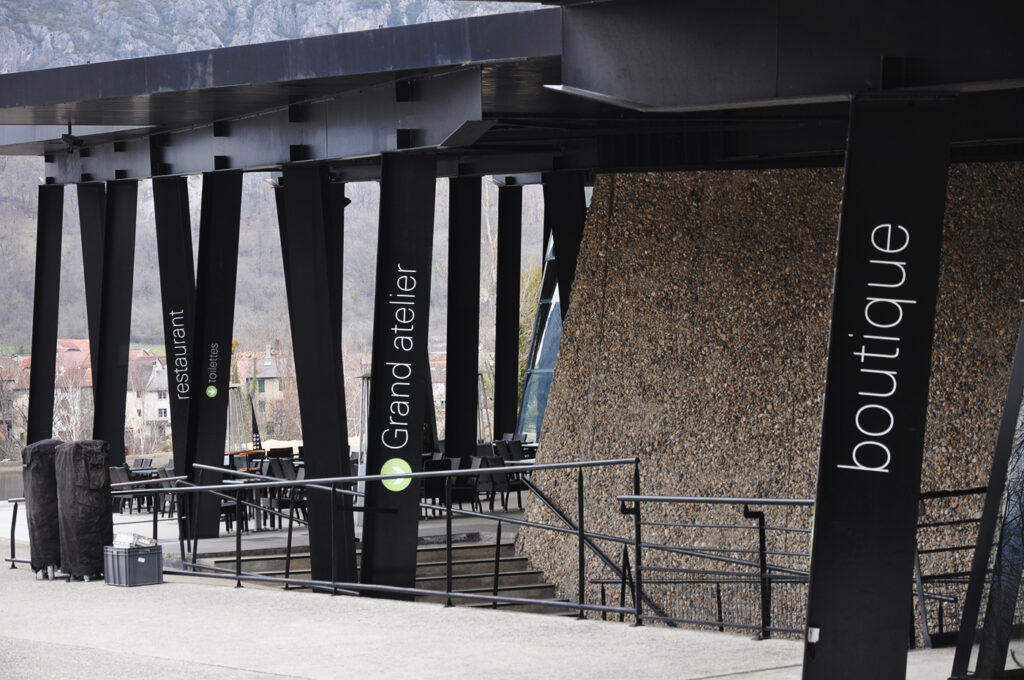
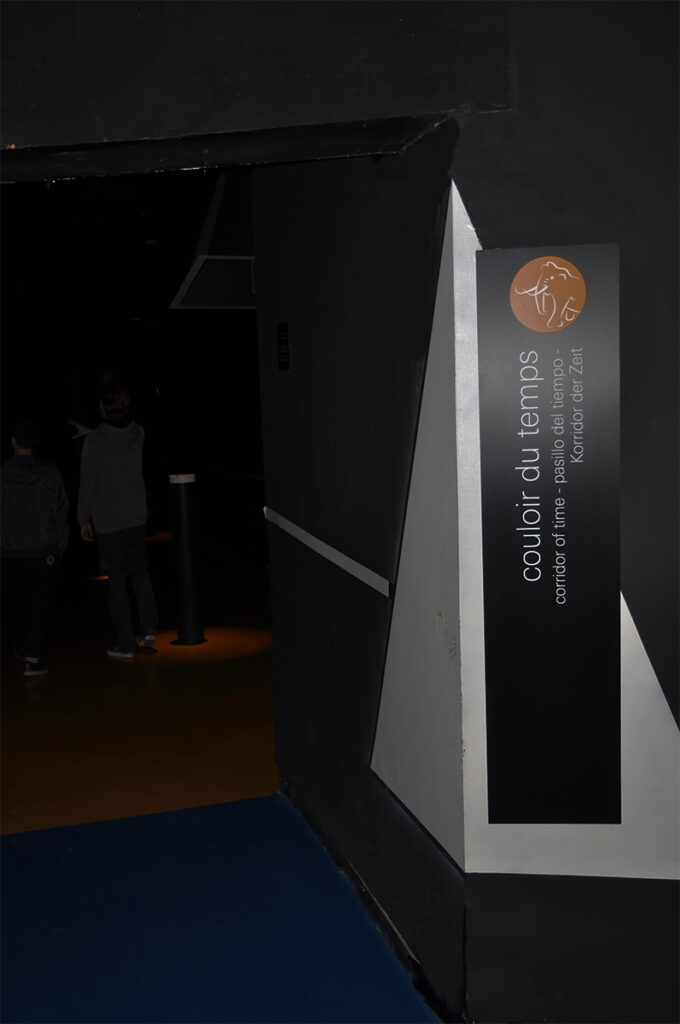
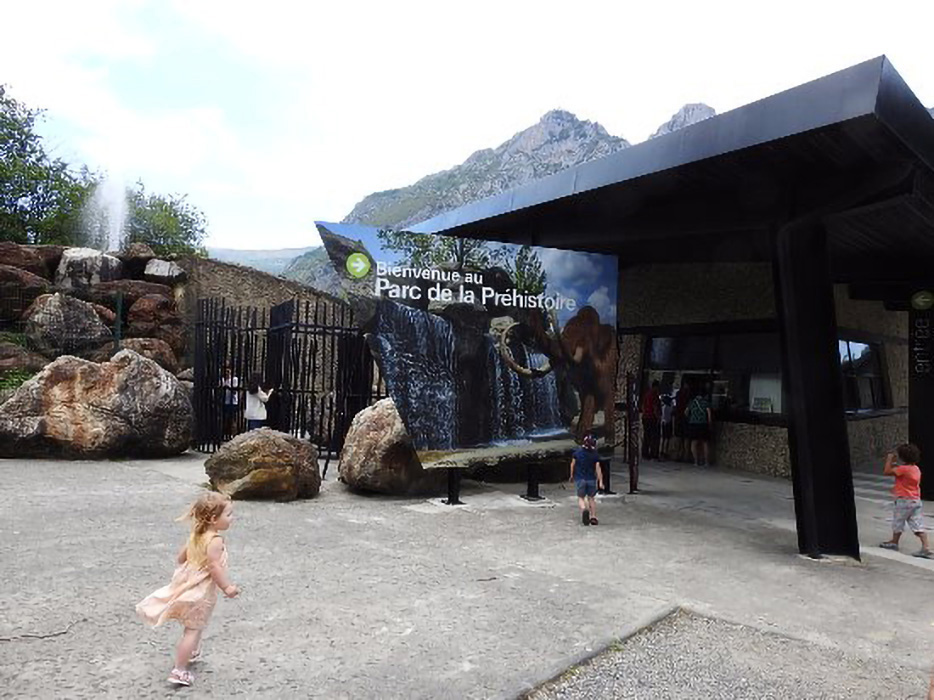
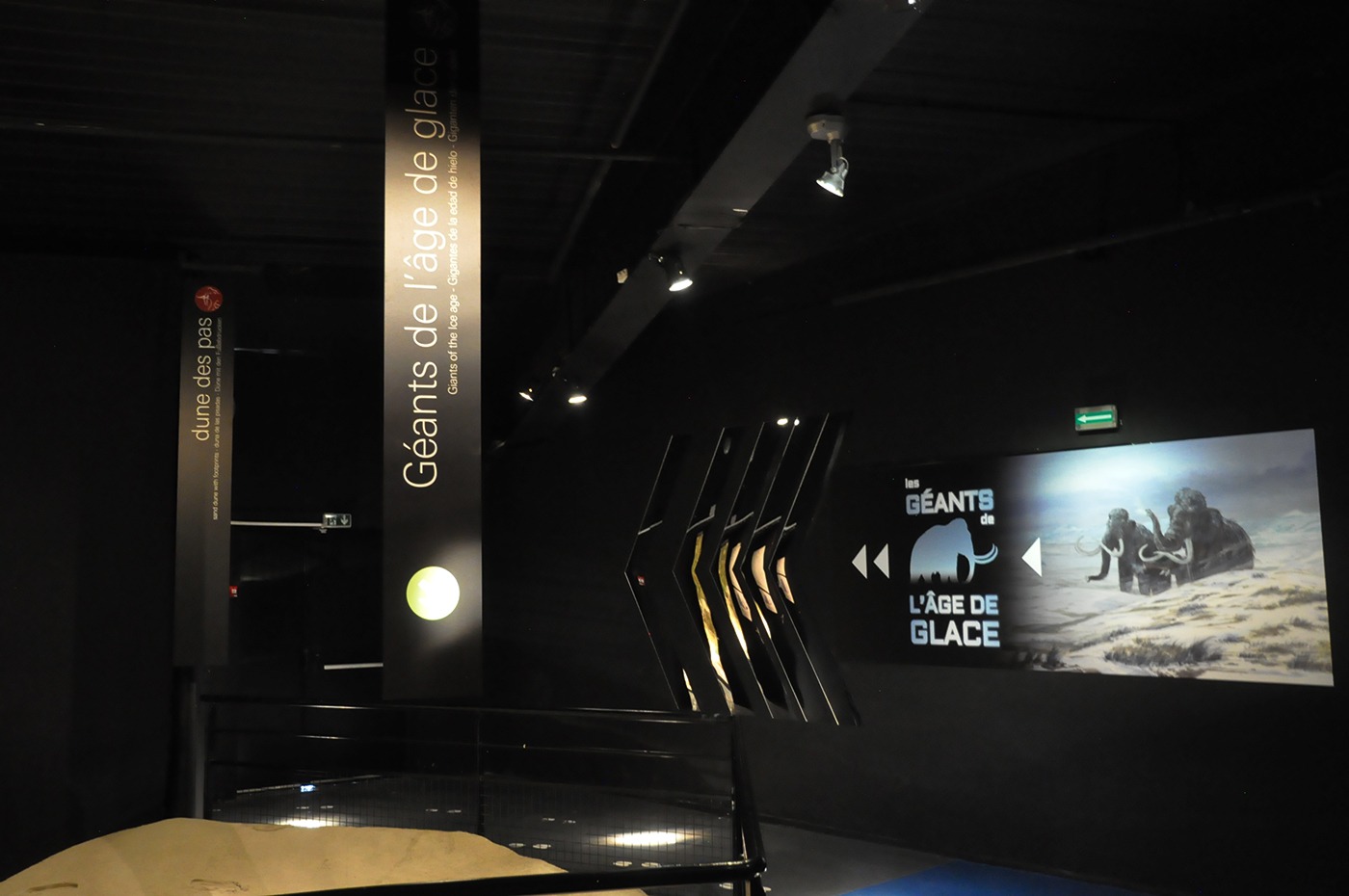
Created in 1994 by the Ariège Departmental Council, the Prehistoric Park covers 13 hectares and is a benchmark site for showcasing cave art and prehistoric cultures. It comprises a large outdoor area with a very natural character, including a set of facilitated thematic workshops (fire, flint knapping, hunting, fire) laid out along an educational trail, and a large modern building that forms a counterpart. The latter includes a museum called the Grand Atelier, a restaurant, a shop and administrative offices; dark and immersive, radically modern, it seems to evoke the passage from light into the depths of the caves.
The park holds the labels “Grands Sites Occitanie – Niaux-Mas-d’Azil, Pyrénées Préhistoriques” and “Qualité Tourisme Sud de France”, and attracts a large French and international audience every year.
Intention
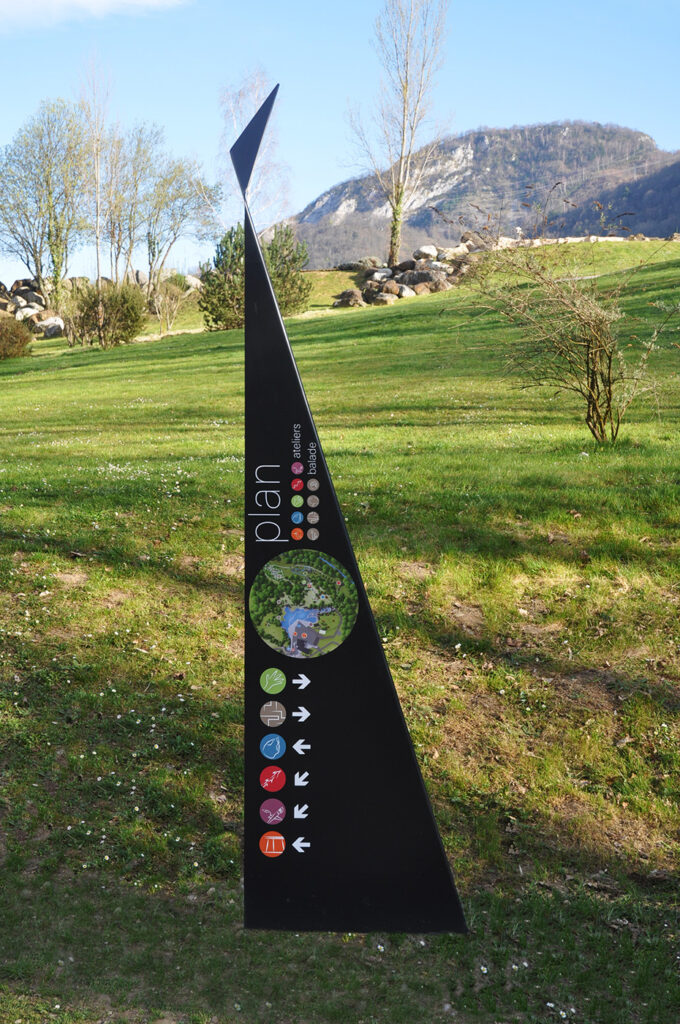
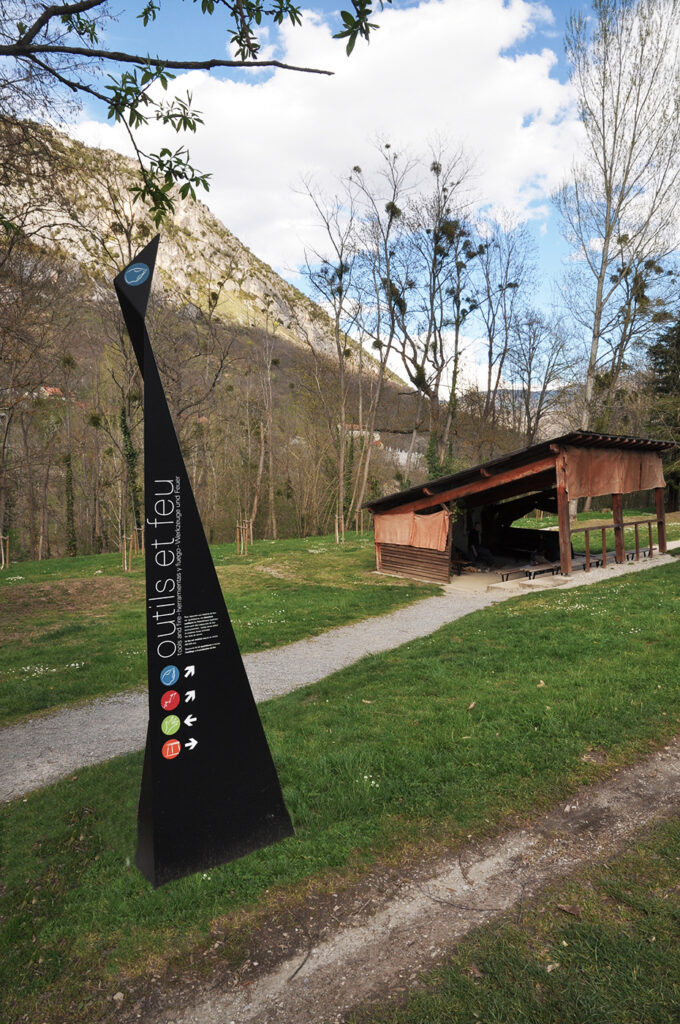
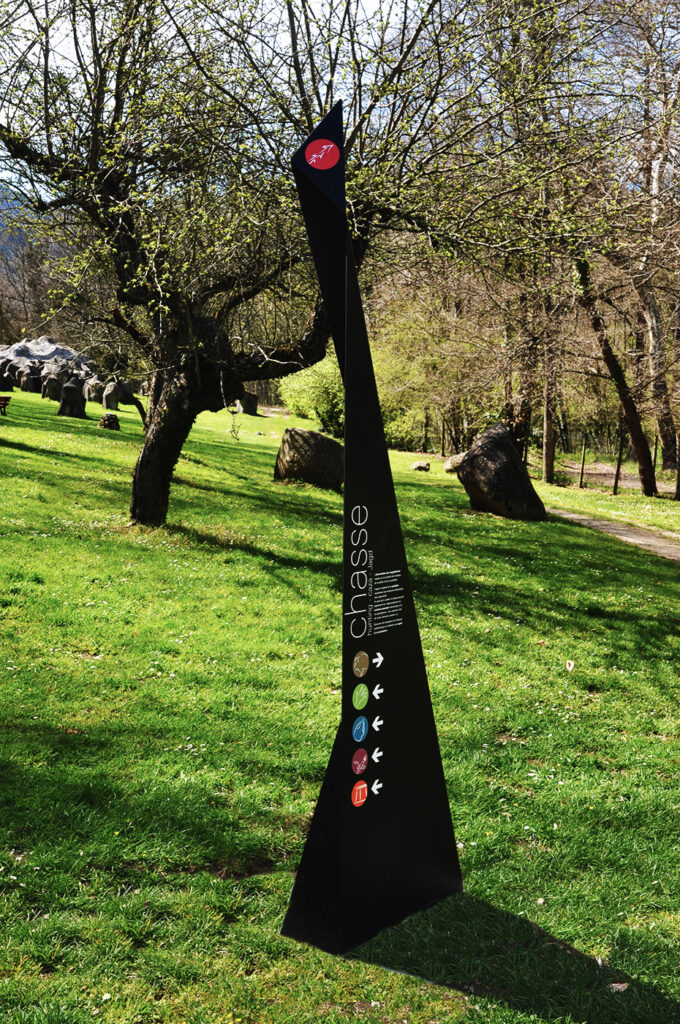
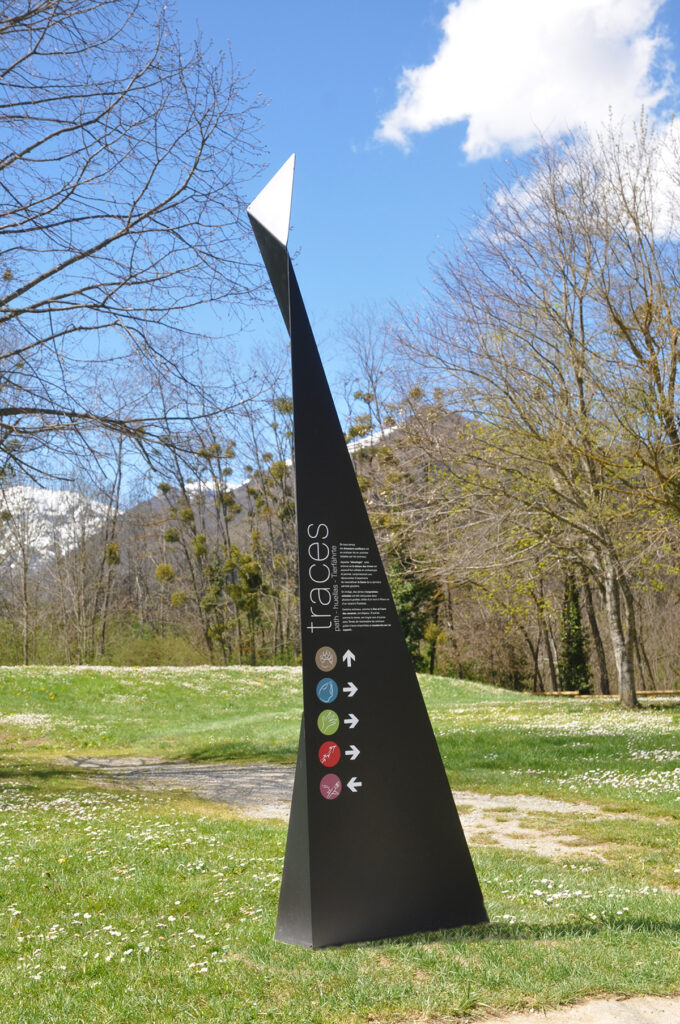
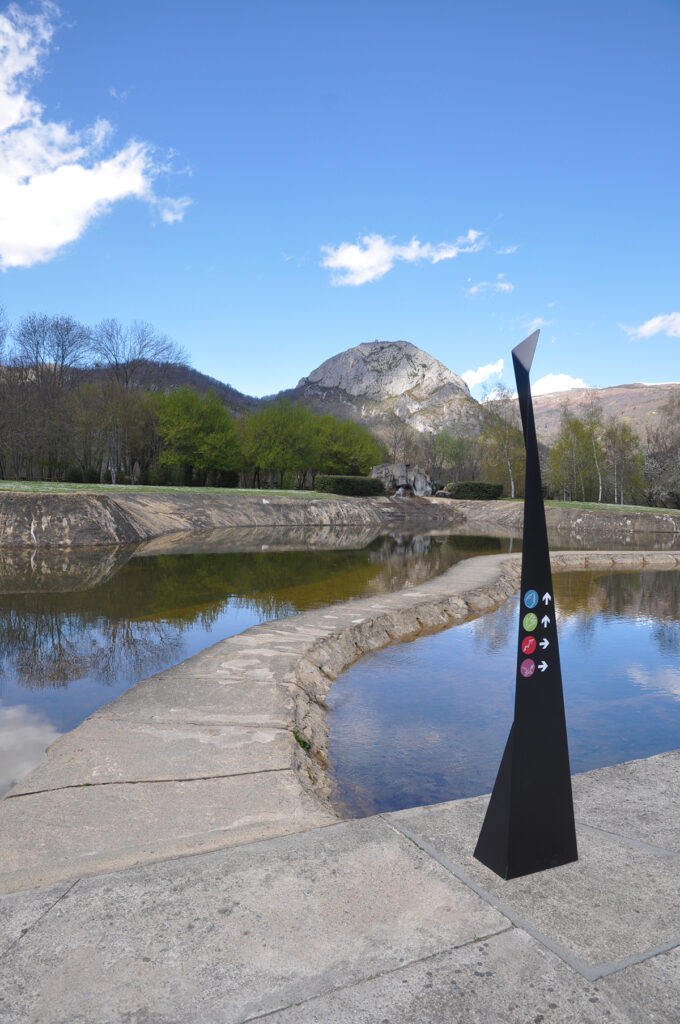
The challenge was to complement this contemporary architecture—which stands in stark contrast to the park’s very theme—to create a visitor experience that combines education and emotion. My approach was to design signage that extends this experience of threshold and depth, creating a contrasting yet harmonious dialogue with the landscape and the prehistoric theme, all with a sense of solemnity.
Realization
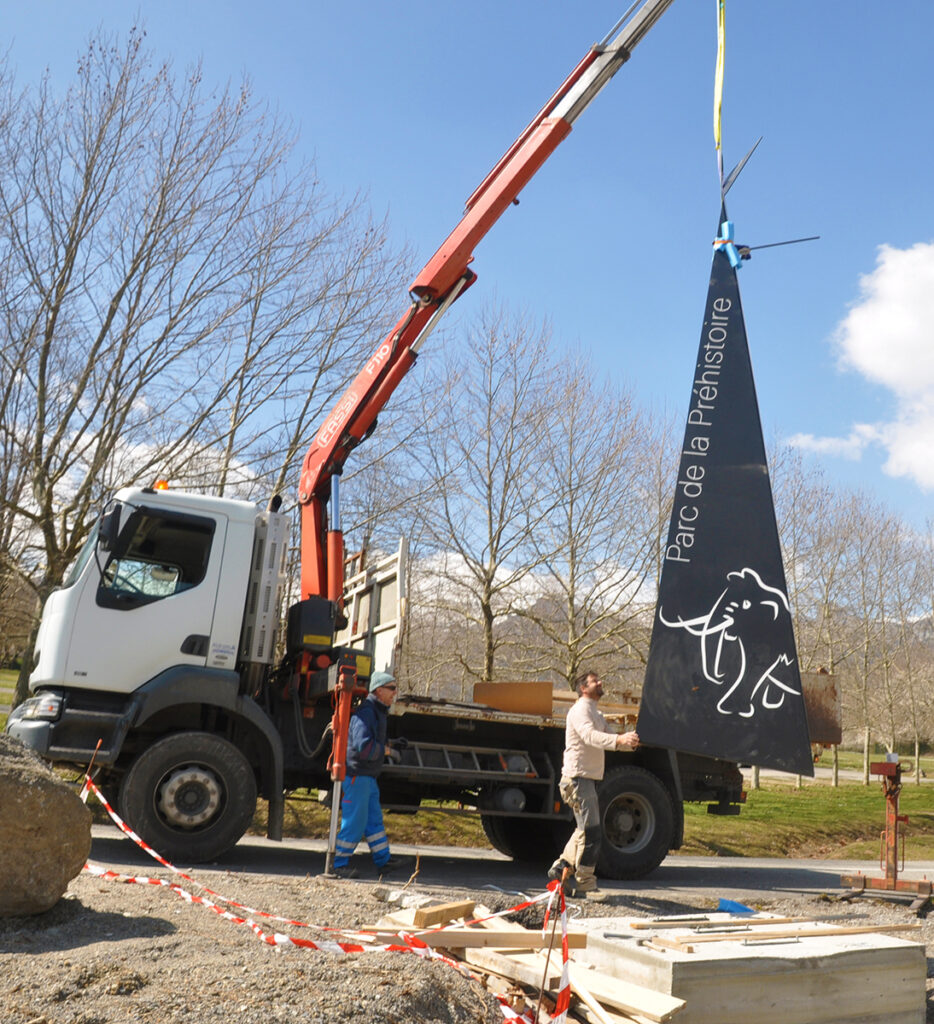
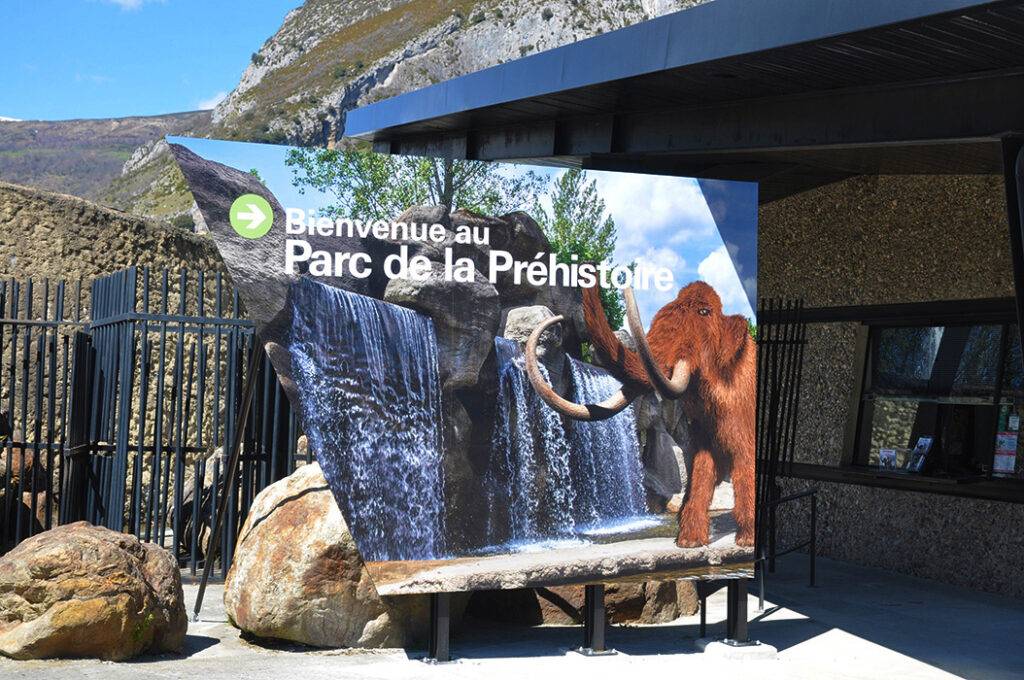
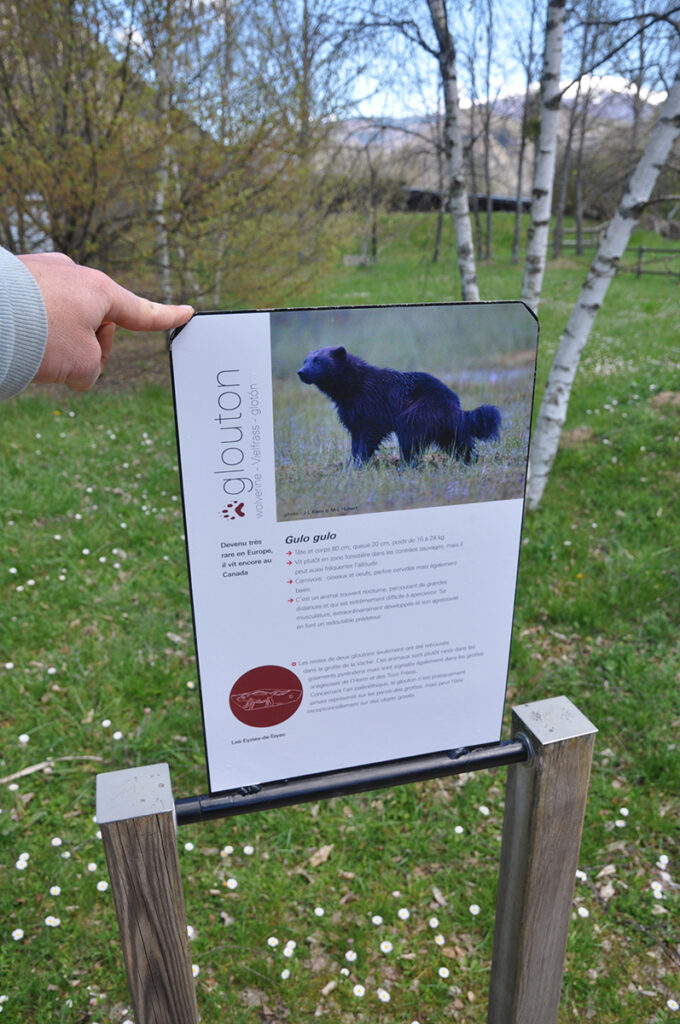
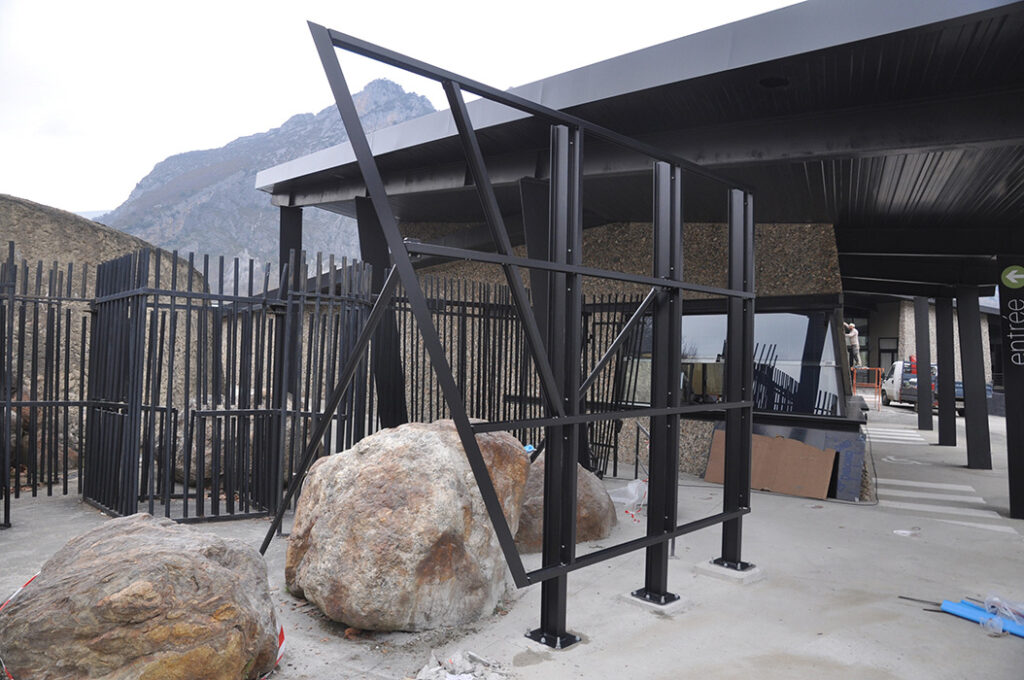
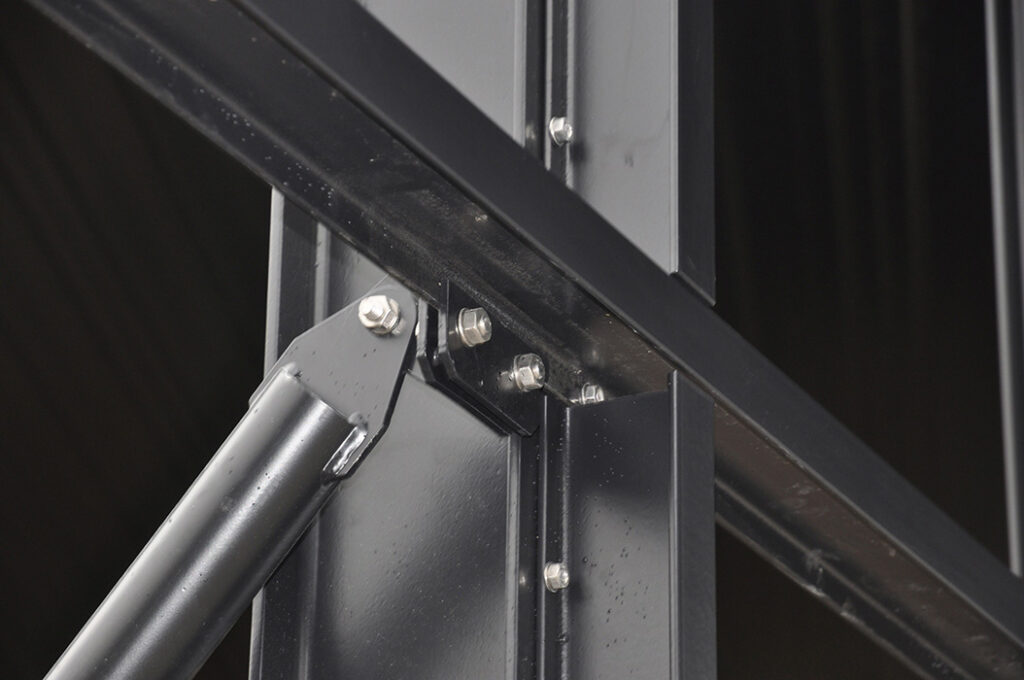
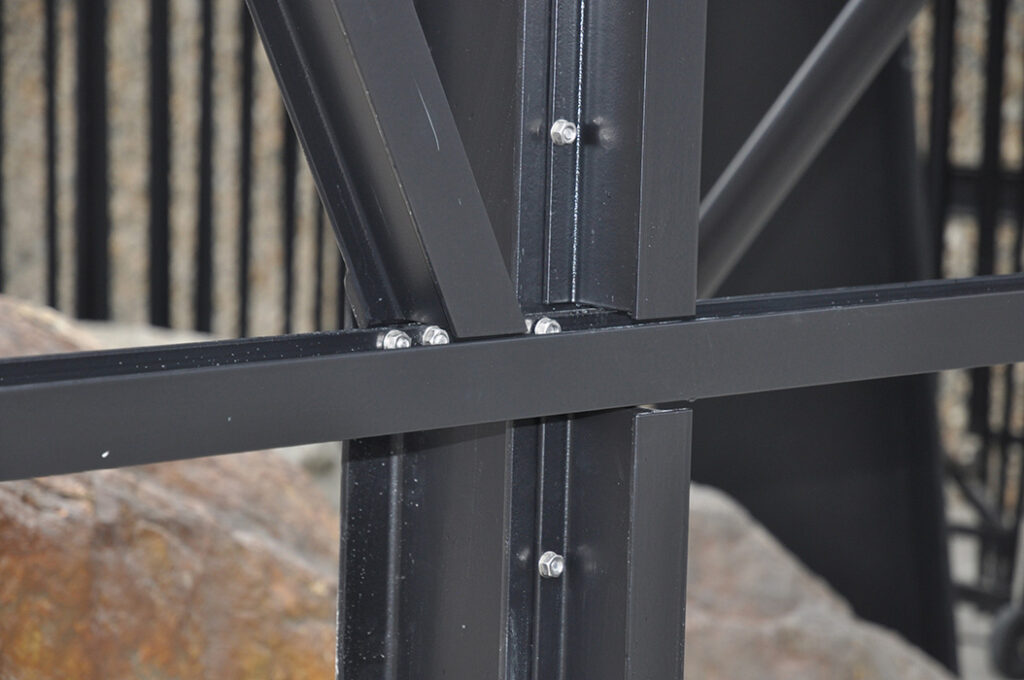
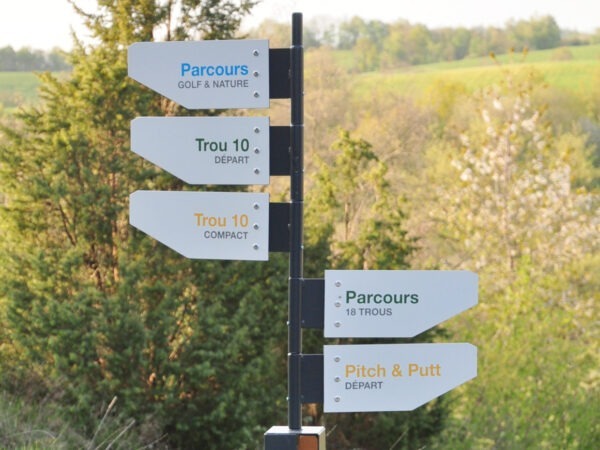
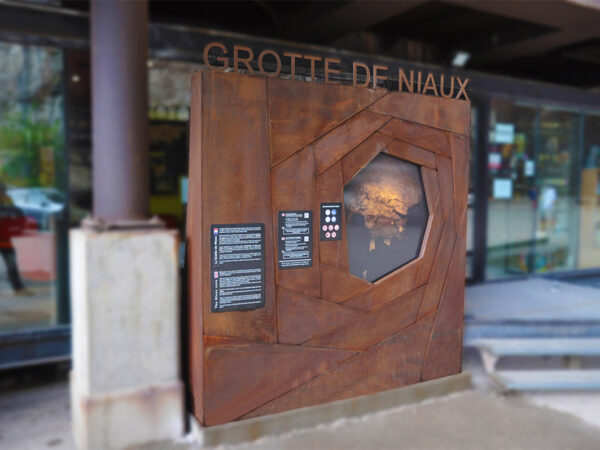
The furniture blends seamlessly with the existing design in terms of both color and contemporary lines, while meeting sustainability criteria (metal, durable, and infinitely recyclable). The content and imagery are intentionally understated, minimalist, and educational to ensure maximum clarity and accessibility for the public. The creation from scratch of the building’s signage and wayfinding system, along with the redesign of the museum’s and outdoor media displays, form a coherent and comprehensive whole that was necessary to breathe new life into the Park after 20 years of operation.
Symbolic Dimension
Beyond simply conveying knowledge, the project sought to create a powerful resonance—through contrast—with the prehistoric imagination; much like David Lynch in his cult film “2001: A Space Odyssey”, which plays with an object of a mysterious and unconventional nature. Moving beyond its original function as signage, the furniture takes on a timeless quality, becoming a mirror of time—a gateway to the world of origins, where science and emotion converge. The signage thus becomes a “bridge,” connecting our era to the depths of humanity’s cave origins.