Context
The Niaux Cave, located in the heart of the Vicdessos Valley in Ariège, is one of the most famous decorated caves from the Magdalenian period. Its paintings, particularly those in the “Salon Noir,” are among the most remarkable examples of prehistoric cave art. Designated a Historic Monument in 1911, the cave welcomes a large number of visitors from around the world every year.
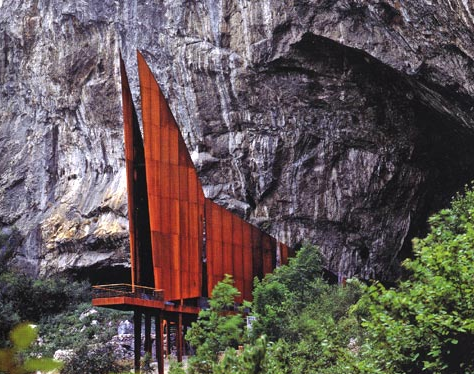
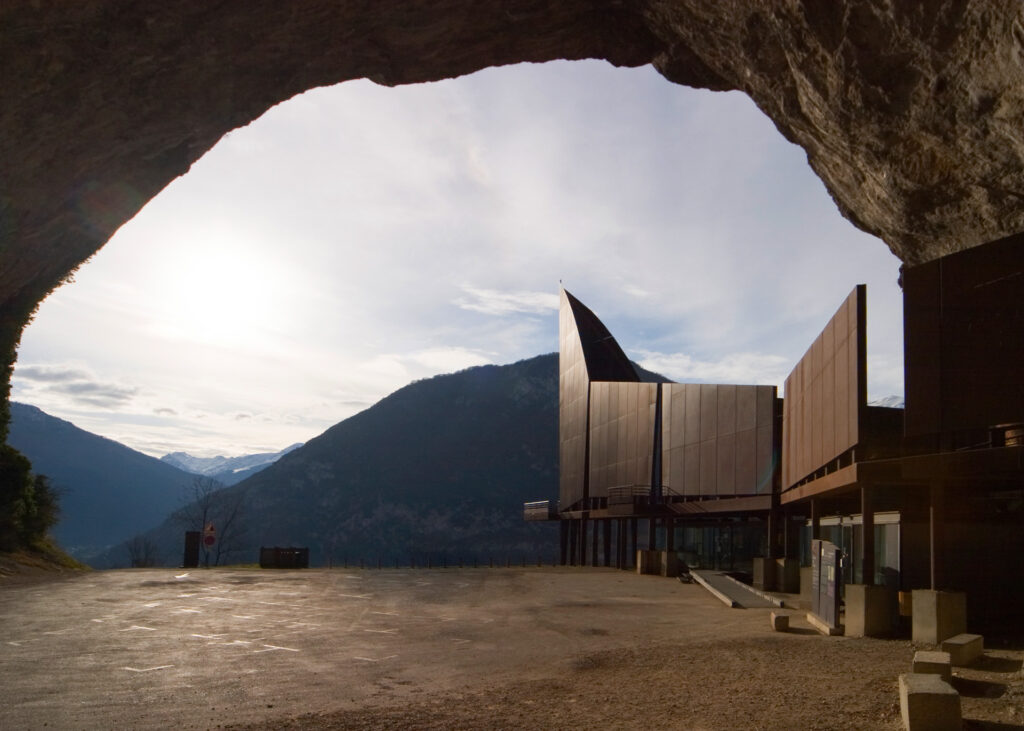
In the 1990s, Italian architect Massimiliano Fuksas designed a contemporary structure made of Corten steel at its entrance, strongly defining the site’s identity and creating an iconic architectural threshold.
Intention
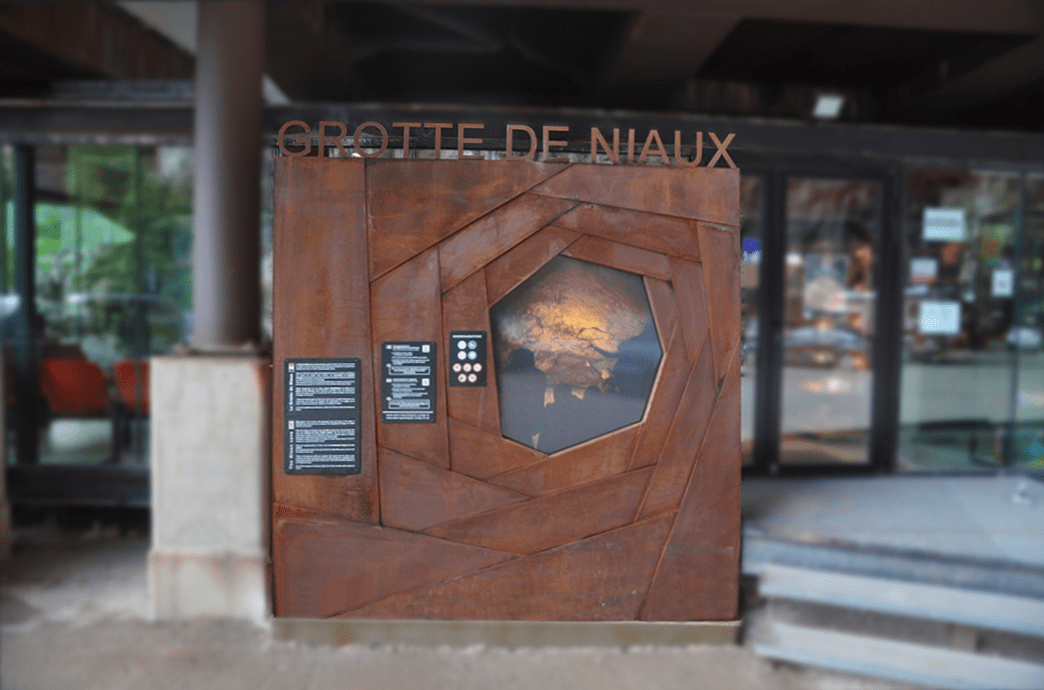
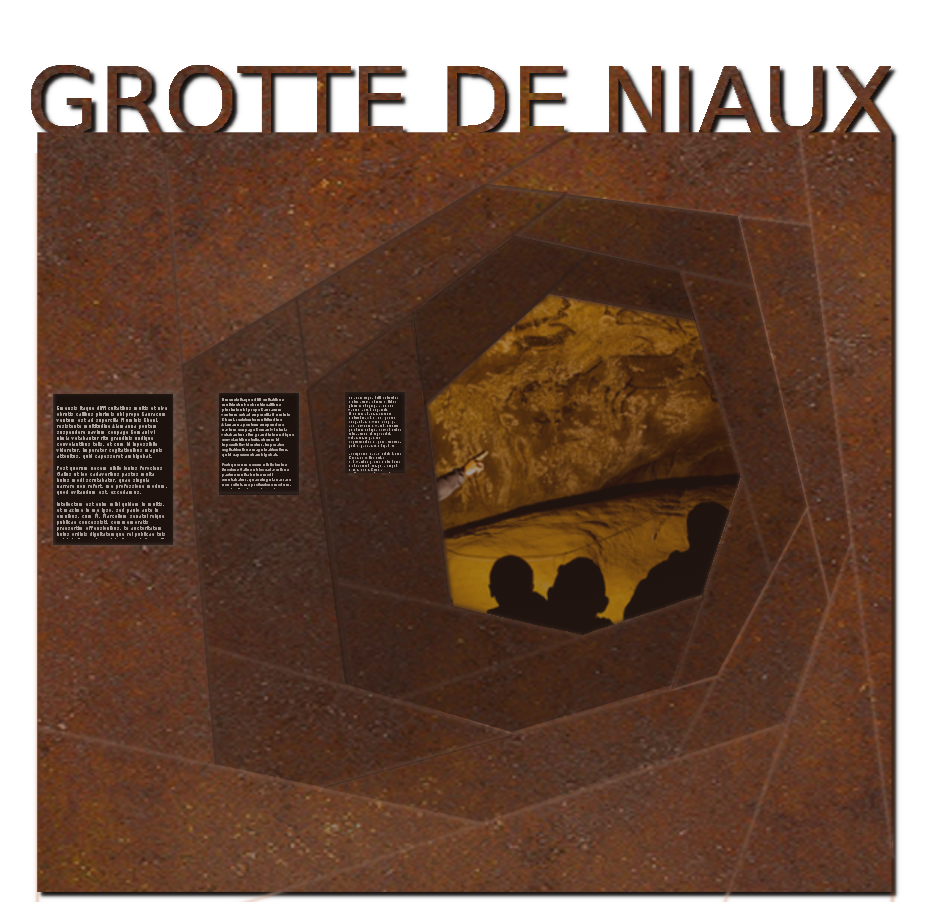
My welcome panel project follows this continuity, adopting Corten steel to dialogue with the existing work and maintain aesthetic and symbolic coherence. The objective was to prepare visitors to enter a unique place, combining visual sobriety, pedagogy, and respect for the heritage setting.
Creation
The panel combines a complex structure of Corten steel “scales” with a minimalist design. The material, whose texture and rust-colored hue express iron in its rawest form, echoes the cave’s mineral and timeless character. Architectural integration and the evocation of depth in the design guided the concept to spark the visitor’s interest and then welcome them, without diverting their attention from the site itself.
Symbolic Dimension
More than just a practical medium for information, the shapes and arrangement of the scales symbolize both the mechanism of a mechanical camera shutter, like a snapshot zooming into the past, and a metaphor for the cavern descending into the depths of earth and time. The installation marks the transition between the present and the past as much as it does the transition between the outside world and the inner world of the mountain.